
Womanist Theology: The Practice of Holy Play
THE PLAYGROUND
Play is not frivolous. It is how our souls remember freedom.
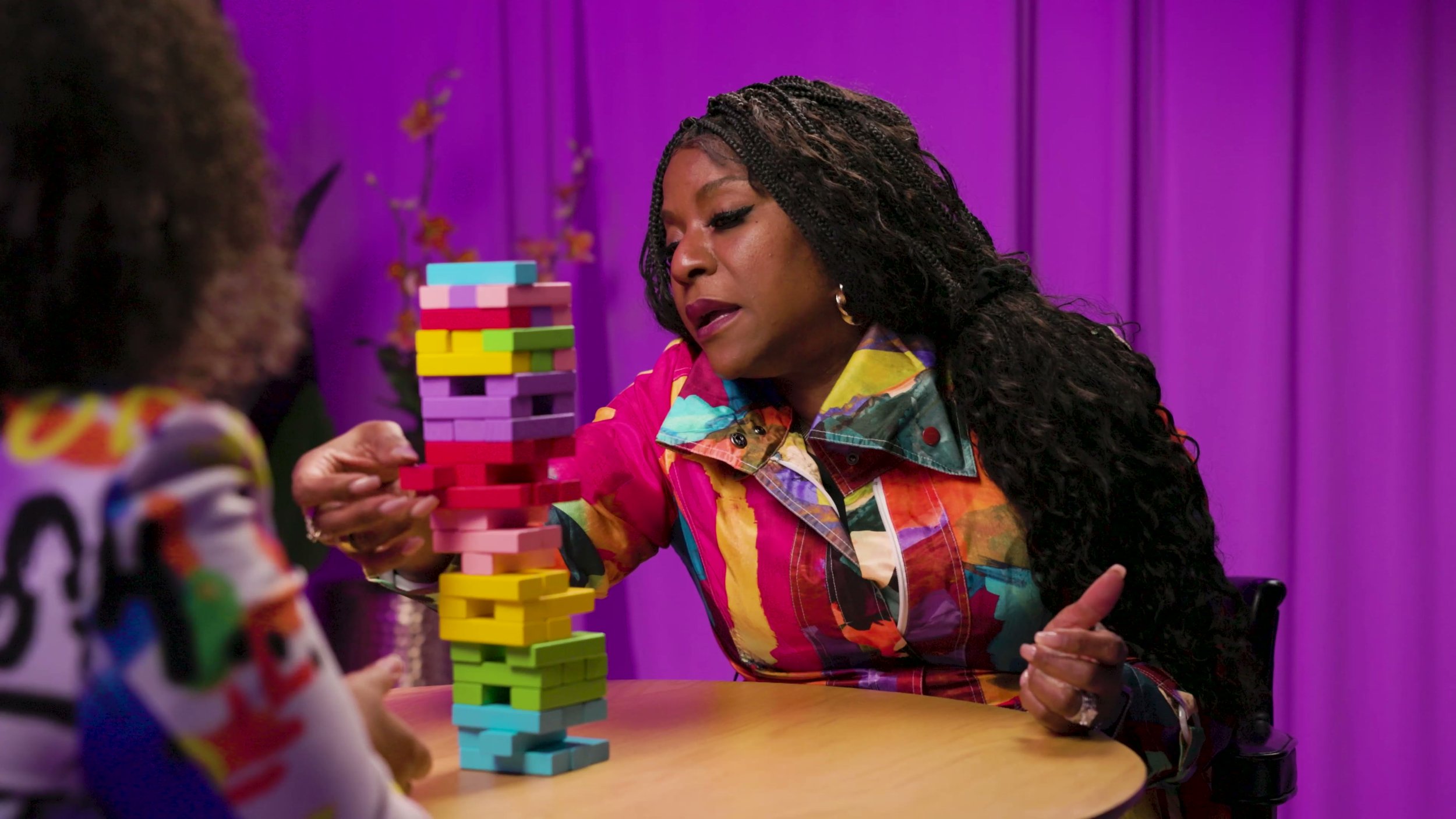
About this course
Womanist Theology: The Practice of Holy Play explores where womanist theology and play meet. It draws on the ways Black women have long practiced play as theological, ethical, and liberating work, rooted in the body, in culture, and in community.
Across six lessons, Rev. Dr. Lakisha R. Lockhart leads participants through the four tenets of womanist ethics: Radical Subjectivity, Traditional Communalism, Redemptive Self-Love, and Critical Engagement. Every lesson pairs her teaching with Scripture and with something to do together: a creative selfie, game time, a vision board, a tower of Jenga, a round of Red Light, Green Light.
The course is written to be led. Everything a facilitator needs is in the Leader Guide, and everything a participant reflects on between gatherings is in the Participant Guide.
Most adults stopped playing a long time ago
Not on purpose. Work got serious, life got heavy, and play started to look like something only children have time for. Joy is usually the first thing cut.
Womanist theology tells a different story. Play is not frivolous. It is how the soul remembers freedom: a way of knowing God, resisting what diminishes us, and finding one another again. As Dr. Lockhart puts it, Scripture is "chock-full of play."
The six lessons
Each lesson pairs a teaching video with a practice the group does together, then sends everyone home with a devotional that carries it into the week.
LESSON 1
What is Womanism?
Alice Walker's definition of womanism, the four tenets of womanist ethics, and play reframed as an embodied spiritual practice. The group starts with a Play Audit.
Psalm 139 · John 10:9–10
LESSON 2
Embracing Self
Radical Subjectivity: naming yourself for yourself. Participants make a Creative Selfie, a picture of who they are rather than what they do.
Genesis 1:26 · Mark 5:25–34 · Romans 9:19–26
LESSON 3
Engaging Culture & Community
Traditional Communalism: no one is free until everyone is free. The group plays games together, then goes home to share a meal.
Acts 2 · Isaiah 61 · Luke 1 · Luke 4

LESSON 4
Embody God’s Love
Redemptive Self-Love: loving yourself, regardless, as a holy act. Participants build a vision board and leave with a week of affirmations.
Romans 8:38–39 · 1 Corinthians 6:19–20

LESSON 5
Enkindle the World
Critical Engagement: play as protest, resistance as art. The group takes apart a tower of injustice, one Jenga block at a time.
Luke 4:18

LESSON 6
Doing Double Dutch
The four tenets, woven together. A game of Red Light, Green Light becomes a way to discern what to pause, what to tend, and what to begin.
Philippians 1:6 · John 15:9–17
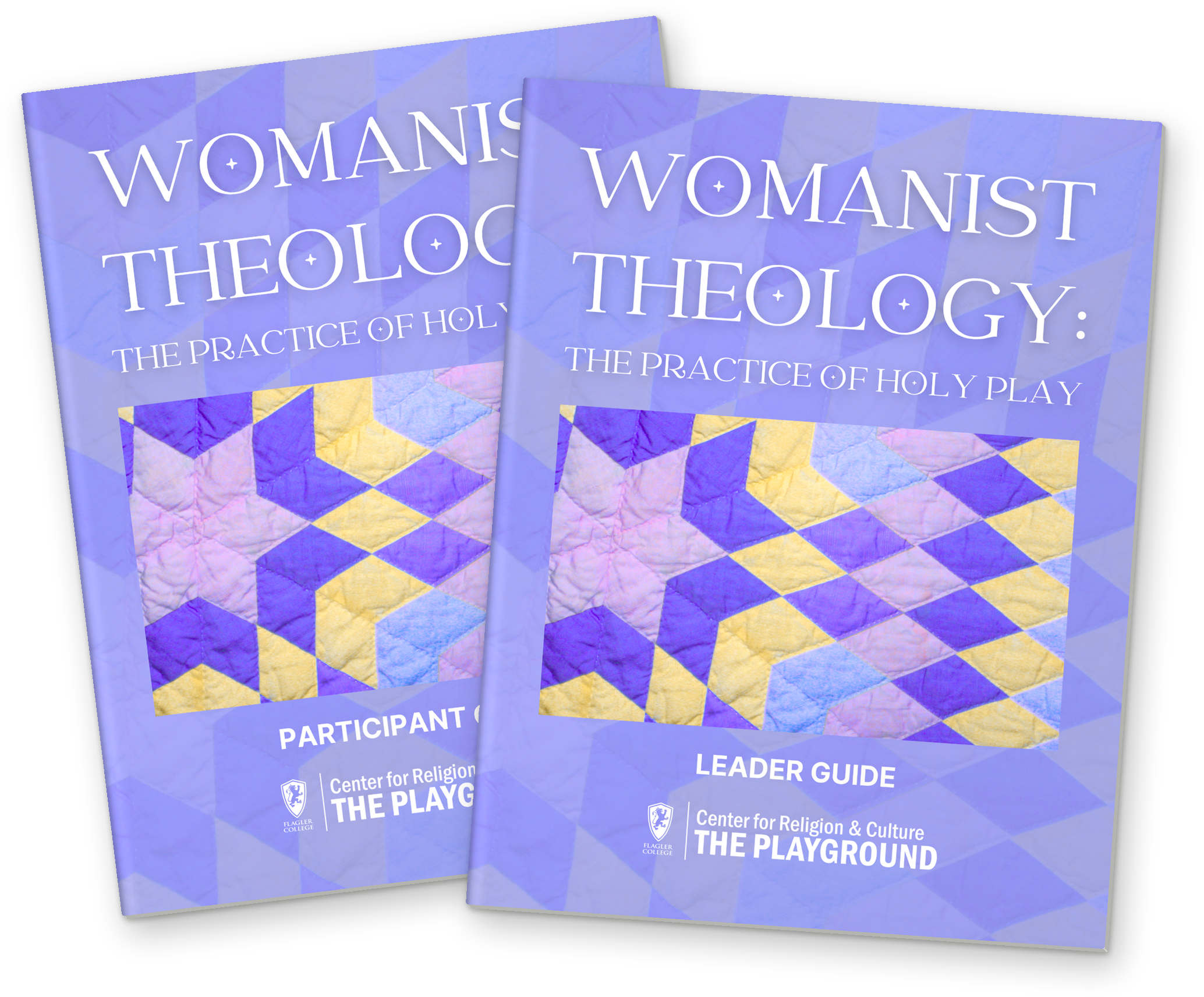
What’s included in the course
Six lesson videos
Six to thirteen minutes each, streaming on demand.
The Leader Guide
Objectives, prayers, setup lists, discussion questions, and play activities.
The Participant Guide
Six devotionals, journal prompts, and a Play Audit.
A sample group covenant
Six commitments to read together in week one.
A Play & Liberation retreat
Ideas for a day of storytelling, shared meals, art, and rest.
Playlists and a reading list
Four playlists, one for each tenet, plus books and media for going further.
What this course gives you
FOR YOU AS THE LEADER
Ready to teach.
Prayers, setup lists, activities, and discussion questions are already written.
You're not the expert.
Dr. Lockhart teaches on video, which frees you to hold the space.
You get to play too.
The guide asks leaders to share their own story first.
FOR YOUR GROUP
The learning happens in the body.
Every lesson includes a hands-on practice, done together in the room.
Room for every energy level.
Games, art, and movement, with space for people who'd rather watch first.
Six weeks of practice.
About an hour of teaching video, with devotionals between gatherings.
FOR YOUR COMMUNITY
A shared language for joy.
A group that has named Redemptive Self-Love together talks about worth differently.
A practice for the weary.
Play as rest and resistance, for people who forgot they were allowed.
A retreat of your own.
A Play & Liberation day retreat outline in the Leader Guide.
Meet the theologian

Rev. Dr. Lakisha R. Lockhart
Associate Professor of Christian Education at Union Presbyterian Seminary. A theological educator, play facilitator, and self-described "rope-jumping educator," she brings play, movement, and creative expression into faith formation, and is the author of Doing Theological Double Dutch: A Womanist Pedagogy of Play.
Bring Womanist Theology: The Practice of Holy Play to your group
Frequently Asked Questions (FAQs)
-
No. The Leader Guide includes session goals, opening and closing prayers, setup lists, discussion questions, and notes on facilitating well. Its own advice to leaders: you don't need to be an expert or have all the answers. You are a guide and a co-listener.
-
A few, and the Leader Guide lists them lesson by lesson: craft materials for a Creative Selfie, board or card games, poster board and magazines for a vision board, a game of Jenga, and open space with a jump rope or two for the final lesson. Meeting online? Each activity has a virtual option.
-
You can, and the six devotionals are built for time on your own. But the course assumes a room. Lesson Three is game time, Lesson Six is a playground game, and womanist theology treats community as the point rather than a nice extra.
-
Plan on about 90 minutes. The teaching videos run six to thirteen minutes, and most lessons pause partway through for a group activity before finishing the video and discussing it together.